The hall and the hour
Marokand Concert Hall: what to expect
What the Marokand Concert Hall show in Samarkand offers: the dances and music, the hall, who it suits, how to book and how to get there.
Reserve a seat in Samarkand ↗Quick answer
The Marokand Concert Hall show is an hour-long theatrical concert in Samarkand. It has national dances in hand-crafted costumes, theatrical scenes and live Uzbek music, and it draws on regions from the Fergana Valley to Khorezm. You pick a dated ticket in the booking calendar, travel to the hall by taxi, and can cancel free up to 24 hours before. It suits visitors who want Uzbek performance, not a dinner.
What the show is
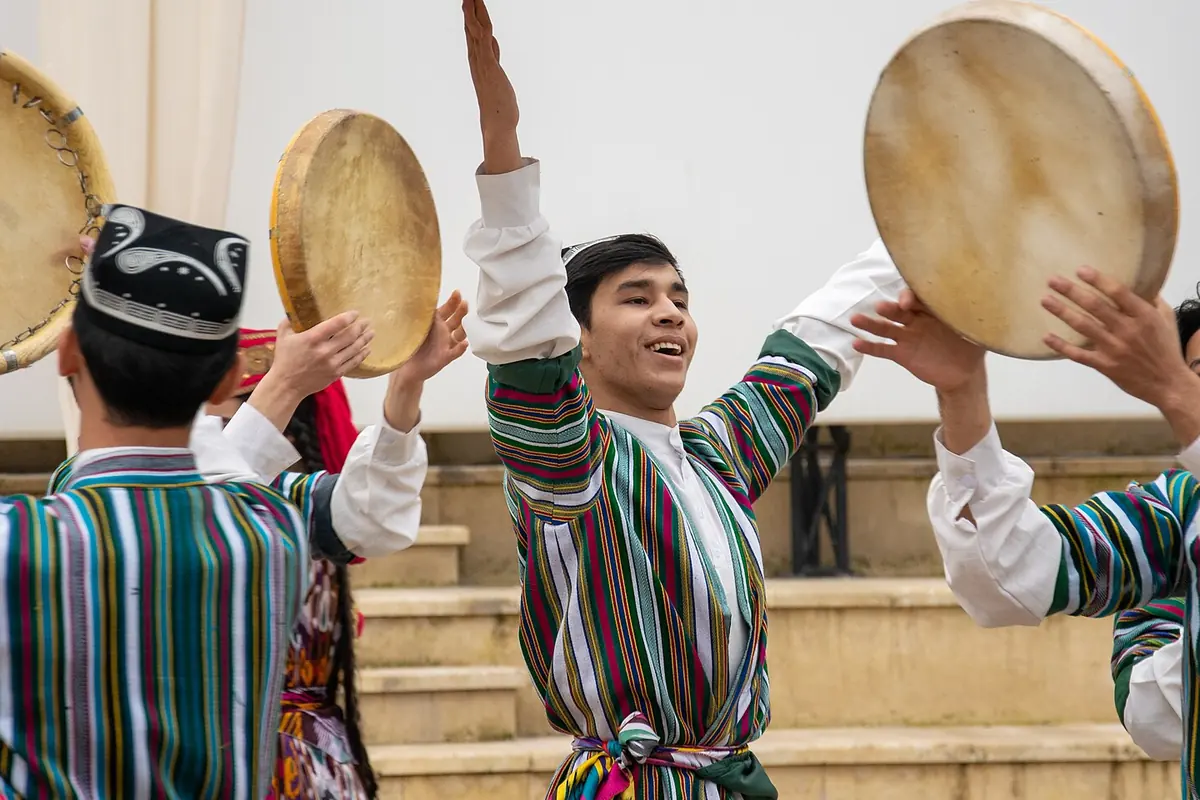
The Marokand Concert Hall show is a theatrical concert staged in Samarkand. The ticket describes national dances performed in luxurious, hand-crafted traditional costumes, live musicians, theatrical scenes and artistic compositions, all in one hall, over about an hour. The costumes are meant to tell the story of different eras and regions, and the scenes present the customs, rituals and values of places across the country, from the Fergana Valley to Khorezm. That makes it closer to a short staged revue of Uzbek folk culture than to a formal recital, a lecture or a dinner show. In ticket terms, what you pay for is the seat and the show: the dances, the scenes, the compositions and the venue's sound and lighting.
What a regional programme means
A show that moves between regions draws on traditions that UNESCO's lists describe separately. The ticket names the Fergana Valley and Khorezm. UNESCO describes Katta Ashula as a traditional song that forms part of the identity of various peoples of the Fergana Valley, and it describes the dance Lazgi as initially associated with the Khorazm Region and since widespread in Uzbekistan. Neither is promised as a number on the night, because pieces and performers can change, but the names are a useful key to what you are watching. The guide to Uzbek dance and music by region sets out what each tradition is and where it comes from. Khorezm, spelled Khorazm in UNESCO's files, is the same region, so you may meet either spelling on signs and in books.
Read next: Uzbek dance and music by region
Costume and craft
Costume carries much of the story in a show like this. The ticket calls the costumes luxurious and hand-crafted, each one telling the story of a different era and region. Uzbek dress draws on a long textile tradition. Wikipedia calls ikat, a weaving technique in which the yarns are dyed before they are woven, common in Uzbek culture, and lists Samarkand among the Silk Road oases that were famous for fine silk ikat. It also describes the embroidered doppa, the skullcap of the Uzbek and Uyghur peoples, whose designs can indicate the wearer's hometown. Wikipedia adds that doppas are worn by men, women and children of all ages, and that their designs symbolise elements of the wearer's background.
The music
The ticket promises live musicians who fill the hall with Uzbek melodies. Wikipedia describes the music of Uzbekistan as characterised by complicated rhythms and meters, and lists traditional instruments that include the long-necked fretted lutes dutor and rubob, the gʻijjak spike fiddle, the doira frame drum, the surnay, a loud oboe, and the karnay, a long trumpet. Which instruments appear on a given night is up to the ensemble, so treat that list as a guide to what Uzbek music can sound like and not as a line-up. The guide to instruments goes through the families one by one. Wikipedia adds that Uzbekistan has a long history of music and a large variety of instruments, which is why live musicians are a draw in themselves.
The hall
The show is held in a modern concert hall that the ticket describes as a comfortable venue with professional sound, spectacular lighting and stage effects, cozy seating and air conditioning. That is a different setting from the historic buildings most visitors come to Samarkand for. Madrasas and mausoleums show you the tilework and the architecture; a theatre gives the dances a stage, lights and a seat for an hour. If a day of sightseeing in the sun leaves you tired, an air-conditioned seat is a comfortable way to take in some Uzbek culture before the day ends. The hall is described through its fittings, which are sound, lighting, stage effects, seating and air conditioning, so expect a modern theatre rather than a heritage interior.
Where the hall is
The hall is reached by taxi. The ticket gives its position as a short drive from the city centre and from Registan Square, about five minutes by car, so plan it as a separate trip rather than a stroll from the monuments. On arrival, show the Centralia travel name or logo to the administration, as the ticket instructs. Decide before the show how you will get back, and ask your accommodation or the hall's staff to help you with a taxi. Keep a little time at each end of the hour for the ride, and keep the name of the hall written down for the driver. The ticket is a seat at the show; getting there and back is your own arrangement, by taxi.
Choosing a date
Begin with the booking calendar, where every open date carries a start time, and lay those against your other plans. If a date offers seat categories, they sit beside it, and each states what it includes. The show is billed at one hour. Through GetYourGuide a full refund applies when you cancel a day ahead, and payment can follow the reservation, so holding a date is free until you pay. Choose the date first and the rest of the day around it, because the show lasts only an hour and the calendar's start time anchors the evening.
Rules, ages and what is not covered
Alcohol and drugs are not allowed in the hall. The ticket lists age notes: babies under 1, and children under 2, 3 and 4, are marked as not suitable, as are people over 95. Read those against the youngest and oldest in your party before booking, and choose another activity for the day if they rule someone out. The ticket describes a concert show with no meal, so plan dinner separately, and personal expenses are not covered. If your group is mixed in age, a one-hour show is easier to manage than a long evening out. These notes are printed on the ticket page, so read the page itself once before you pay.
Where it fits in a Samarkand day
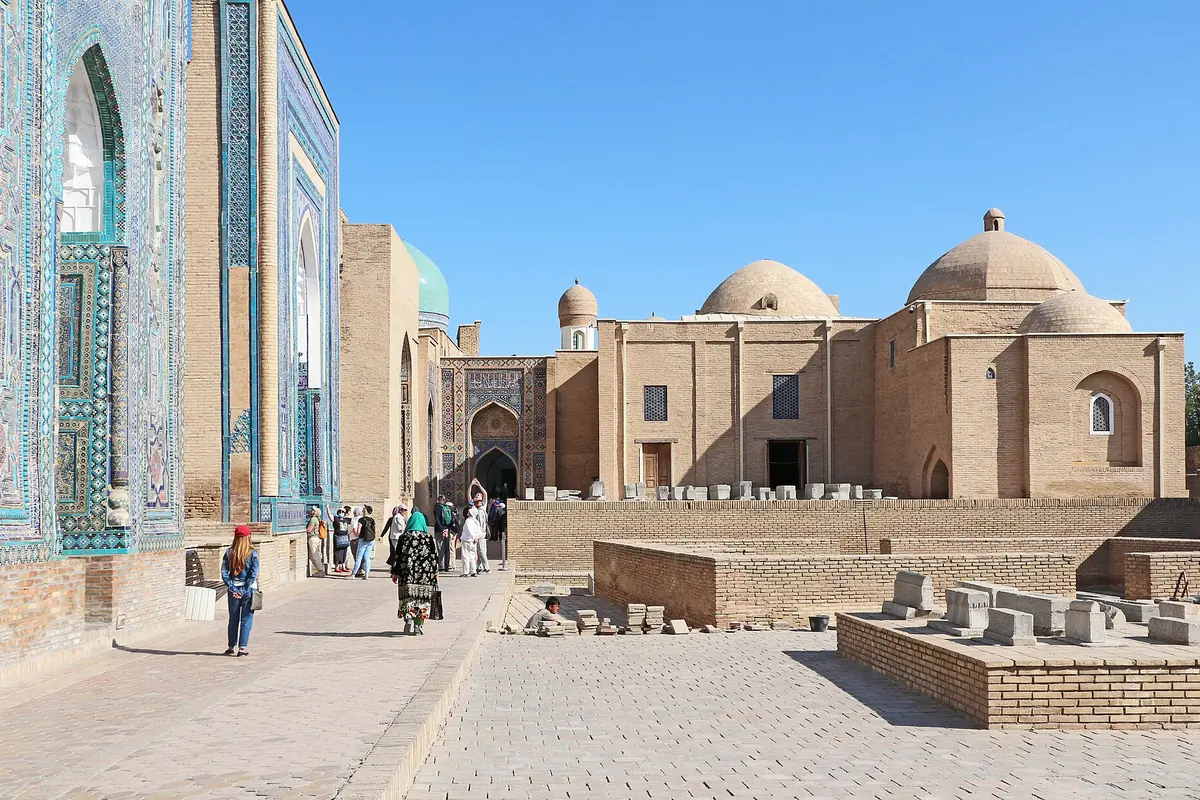
Samarkand is among the oldest continuously inhabited cities in Central Asia, and UNESCO added it to the World Heritage List in 2001 as Samarkand – Crossroads of Cultures. Its famous buildings, including Registan Square, the Gur-e-Amir mausoleum, the Bibi-Khanym Mosque and the Shah-i-Zinda necropolis, are known for cobalt and turquoise majolica tilework. A sensible day puts the monuments earlier and the concert hall on a date and time that suits you, when you want to sit down. The guide to sights near the show suggests an order that keeps the taxi trips short. Wikipedia notes that Timur made Samarkand his capital in 1370, which is why so much of its best-known architecture belongs to his era and to the centuries after it.
Read next: Samarkand sights to pair with the show
Respect for living traditions
The dances and songs staged in a hall began in communities and are still part of daily and festive life there. UNESCO notes that Lazgi is performed during national holidays and folk festivities, and that Katta Ashula is passed from master to pupil. A hall show is a staging made for visitors, and it is worth watching it as one: with attention to the costume and the rhythm, applause where the performers invite it, and no assumption that one hour represents a whole country. Photography rules can vary by venue, so follow the instructions of the hall's staff. A quiet audience is part of the courtesy: let dancers finish a figure before you move, and wait for the end of a scene before you leave your seat.
Who this isn't for
This show is not a Registan-scale spectacle, a banquet or a lecture on Uzbek music. It is about an hour long, it is theatrical rather than academic, and it has no meal. Guests' reviews on the booking page mention small audiences on some dates, so if a packed, festival atmosphere matters to you, a larger public event may suit you better. Travellers with very young children should check the age notes first, and anyone who wants a full classical recital of Shashmaqom, the formal vocal and instrumental repertoire, should look for a dedicated concert instead. None of that makes it a poor choice. It makes it a particular one: a modern hall, an hour, and a programme of dances and live music from across the country.
Frequently asked questions
How long is the Marokand Concert Hall show?
The show lasts around an hour, and the calendar lists a start time for each date.
What will I see?
A theatrical concert with national dances in hand-crafted costumes, theatrical scenes, artistic compositions and live musicians, presenting customs and traditions of regions across Uzbekistan.
How do I get to the hall?
By taxi. The ticket gives a short drive from the city centre and Registan Square. Show the Centralia travel name or logo to the administration on arrival.
Can I cancel?
Yes, until 24 hours before the show, when a full refund applies. Reserving first and paying afterwards is also possible.
Is food or drink included?
No meal is part of the ticket, which describes a concert show. Alcohol and drugs are not allowed, so plan dinner before or after.
Is it suitable for young children?
The ticket lists babies under 1 and children under 2, 3 and 4 as not suitable. Check those notes against the ages in your group.
Sources